Image Of The Day

Joseph Hooker’s sketch of an area of Nepal – now thought to be the earliest Western images of Mount Everest:

From the Kew Art Collection, published by ResearchGate. Mr. Hooker later became director of the Kew Gardens and President of the Royal Society. A review of a recent publication on Mr. Hooker is available in NewScientist here.

So What Makes This So Special?

Neuroskeptic and the folks he’s discussing appear to be excessively naive concerning the mind and its vulnerabilities:

An interesting new paper by Swiss researchers Marcello Ienca and Roberto Andorno explores such questions: Towards new human rights in the age of neuroscience and neurotechnology

Ienca and Andorno begin by noting that it has long been held that the mind is “a kind of last refuge of personal freedom and self-determination”. In other words, no matter what restrictions might be put on our ability to speak or act, or what coercion is used to force us to behave in a certain way, our thoughts, beliefs and emotions are free and untouchable.

Yet, the authors go on to say, “with advances in neural engineering, brain imaging and pervasive neurotechnology, the mind might no longer be such unassailable fortress.”

I have no problem discussing the impact of new technologies on questions of ethics and morality – but one should start from a clear understanding of what’s come before. The very statement that the mind is a refuge betrays a breathtaking ignorance, not to mention an implicit philosophical confusion.

Every time we have an interaction with someone else, there is an opportunity to breach this supposed invincible citadel of refuge. From the most mundane and mild to the prisoner threatened with torture, from advertising (as I discussed a few days ago) to the preacher in the pulpit preaching hellfire and damnation, every interchange carries with it the possibility, and very often the intention, of changing some element of your being. For example, consider the happy person who has a child. Someone kills that child, intentionally. Now that person is very unhappy. The citadel is not in the least inviolable.

Nor should it be. We are not free to execute any random action that occurs to us, for there are consequences to actions, from trivial to terminal; this is, in fact, part of simply evolutionary theory. And the emotions? They are part and parcel of the evolutionary process; they cannot be independent of the outside world, for they are the primary pathway of interpretation of that outside world, an older mechanism than the rationality we rattle on about. Such a refuge would be an oddity in the evolutionary chain; indeed, on another day, I might make the case that pathological individuals may exhibit these characteristics, but they are evolutionary outliers.

I’ve not mentioned the more obvious method for breaching the citadel yet, because that carries with it the philosophical confusion I see here – the mind / body duality. Simple physical damage to the brain can severely damage the mind, and thus this refuge. Some folks lose their short term memories; some have amnesia; etc. By denying this linkage through their assertion that “… beliefs and emotions are free and untouchable,” they indulge in the mistake of the mind / body duality.

The point of the paper – and Neuroskeptic’s post – is to discuss civil rights and how they relate to new technology in which it may be credible to read and even write the mind via fMRI in the not too distant future. I think the first step is to recognize the conceptual differences, if any, between these new technological methodologies, and those already covered by law. After all, we’ve employed many methodologies in the search for truth and intentionality, from phrenology to polygraphs (both failed). Perhaps the key element here is the element of voluntariness? But what about the mundane collection of evidence? Such collections are rarely a matter of voluntary action on the part of a suspect, and yet they remain the only manner in which to justly convict a person of a real crime.

Consider, even, fingerprints. They cannot be withheld, at least in the United States, as they do not fall under the Fifth Amendment protections. From Quora:

No; your 5th Amendment right against self-incrimination applies only to statements that you might make during a custodial interrogation. It does not apply to physical evidence that the police may take from you, such as performing a breathalyzer test, taking your fingerprints, or taking your DNA through a mouth swab or other non-invasive method. [Cliff Giley]

The protection of one’s thoughts, as deduced from an fMRI scan, may indeed require a new law, as the forcible reading of one’s thoughts is not the same as a statement, under what appears to be current law. I will note in passing there will be at least two sources of errors which jurors and law-enforcement personnel will need to consider – that inherent in the machine doing the reading, and that inherent in the thought processes of the subject. Consider the work of Dr. Elizabeth Loftus in the area of false memories as just one example of the latter problem. One’s mind is not a perfect reflection of reality.

Neuroskeptic sets up a question:

So let’s suppose that it’s the near future and this technology really works. You are applying for a sensitive job and you’re asked to take this scan to prove that you have no attraction to children. No fMRI scan, no job. Would that policy be a violation of your rights?

It’s one to ponder. My inclination is that it would be a violation. Not in the sense that it would be unfair to discriminate against someone merely for having a desire, but rather because no-one has a right to know my desires (or beliefs, or thoughts) except me. If I act on a desire, then I’ve made it important to others, but the desire per se is no-one else’s business.

What if, through other means, a manager learns a prospective new employee plans to use their employment to embezzle from the company. Is it ethical to deny employment? How about if they learn of it via the fMRI? Or are actions really the only basis on which to make a judgment?

What if it’s murder rather than embezzlement? Or pedophilia?

The problem here is that there’s a difference between desire, intentions, and actions. Is it right to take an action against a latent pedophile, one who has never acted on that desire and does not plan to? What about the one planning to use his position as a camp counselor to victimize children?

The trick is to find the proper balance that does justice for potential victims and the potentially innocent. Can an fMRI, in the near future, make that distinction? Should the proposed use be outlawed until it can distinguish between those three?

“Tyrannical Decrees” Says It All

From German newspaper Der Spiegel opines on the current American President:

Donald Trump is not fit to be president of the United States. He does not possess the requisite intellect and does not understand the significance of the office he holds nor the tasks associated with it. He doesn’t read. He doesn’t bother to peruse important files and intelligence reports and knows little about the issues that he has identified as his priorities. His decisions are capricious and they are delivered in the form of tyrannical decrees.

So which Roman Emperor best fits Donald Trump? While I’m sympathetic to those who vote for Commodus, the childish-man who becomes the Emperor in Gladiator (2000), and the leering, evil Tiberius of The Robe (1953) and its sequel, Demetrius and the Gladiators (1954) was nearly equally appalling, for sheer infamy, Nero may best apply to President Trump. Self-centered, surrounded by dubious family, and apt to any action, no matter how immoral or unthinkable (Nero had his mother murdered), it’s hard not to like this particular comparison.

But they all have in common a quality of un-Americanness which also marks the current President.

Have another opinion? Send it in, I’ll read up on that favorite nefarious emperor of your’s.

Belated Movie Reviews

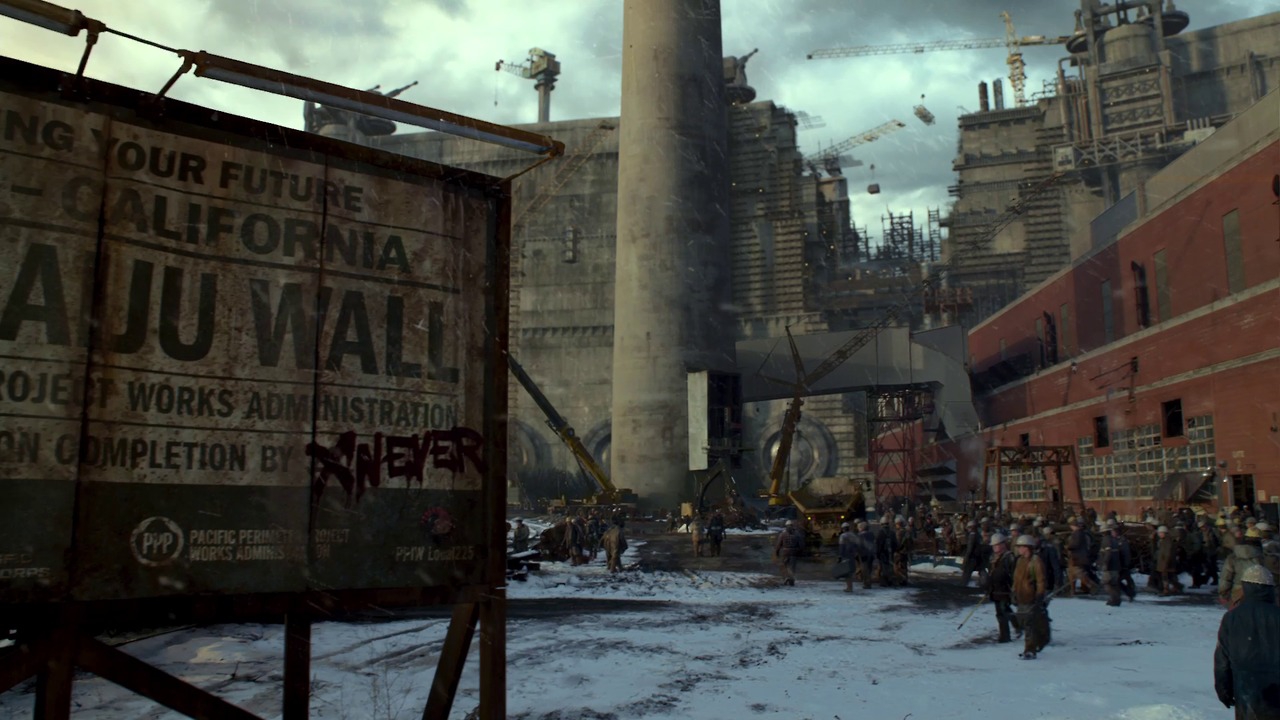
I know I’ve mentioned Pacific Rim (2013) in previous movie reviews, but I’ve never actually reviewed it, so last night I tried to watch it with a critical eye.  This movie, concerning an invading force of monsters, or kaiju, and the huge humanoid machines we invent to protect us, the jaegers, is a landmark in the monster movie genre. The easy way to start this review is to blithely affirm the special effects.

I won’t. Not blithely. I’m going to pick nits.

The monsters do not always seem to have the proper scale. I sense this in two ways. As we cycle through (in flashbacks) the various monsters, some may stand 15 feet tall, others 150 feet tall. Now, we learn early that this series of monsters are classified into categories, although these are never explained, which is fine. The monsters are coming in larger and larger categories (for you science geeks, it may even be monotonically increasing) – but it doesn’t appear the monsters are following the rules. Especially the very first attack on San Francisco, which appears to involve a horrifically huge monster, while other, later monsters appear smaller, even if we only catch glimpses of them.

OK, so management of special effects has some problems; the effects themselves? My next nit involves the eyes of a particular monster, Otachi. You’ll notice they’re on stalks, and I do not believe they ever move or do much of anything. This lack of expression, in contrast to the eyes of other monsters such as his buddy, Leatherback, was jarring. I would at least expect him to blink as he knocks over a building.

Moving on from the special effects, I’d next like to address what may have bothered me the most – the human interactions. In our introduction to our heroes, Raleigh Beckett and his machine, Gipsy Danger, we also meet his commander, Marshal Pentecost, and it strikes me that Marshall Pentecost has very poor habits when it comes to monitoring his battle units. He tells Gipsy Danger to “hold the Miracle Mile”, protecting Anchorage, Alaska from an incoming kaiju, and by no means do not attempt to rescue a fishing boat that’s in the way of that kaiju.

Naturally, Raleigh and Gipsy Danger wade off into the surf to rescue the boat.

Pentecost has similar problems with other of his units; indeed, I started noticing Marshall Pentecost has a bad habit of making and retracting decisions – not an inspirational habit in a leader of the last, best hope for mankind. In particular, his ward, who wishes to become Raleigh’s partner in Gipsy Danger, is bounced around like a tennis ball on the decision court. I’d be not the least surprised to hear she’d gone into therapy after the climactic final fight, with Daddy-issues.

And there are lesser issues. We get a superficial introduction to two jaeger crews who could have been fascinating on their own merits – but that never happens, and they both go down in honorable combat with the kaiju. A proper handling of them could have magnified the impact of the movie on the viewer.

So … long time readers know I like this movie. My Arts Editor estimates I’ve watched it 15 times – but, in my defense, several of those were with a sick cat in my lap. So what do I like?

Crimson Typhoon, Cherno Alpha on their way to the battle line

The monsters are horrific; but better yet is the line, “To fight the monsters, we made monsters of our own.” The jaegers are visually magnificent and convincing. And they’re treated as war vehicles have often been treated over the centuries, as creatures of their own character, in this battle of their own volition.

The story is shown, not told, which is to say, beyond an introductory narrative by Raleigh, which serves to begin his characterization as well as get us going and illustrate our straits, there is little exposition; it is all dialog, interaction, and action, as any story should be. We have believable, even necessary subplots, such as the aforementioned ward of Marshall Pentecost, now vying for a position in the battle line. Her backstory, vividly brought out in a plot zig which illustrates one of the dangers of preparing for war, also enlightens us to the importance of persistence.

And that permits me to transition to the question of theme. Pacific Rim illustrates the importance of persistence and teamwork. Every jaeger has a two (or more) man crew. The point is not the coolness of monsters, or of huge warcraft – those are just the background. The point is trying, to the last inch, to survive, to even win. The realism and story logic exist to sharpen (or blunt) that point. And I like, especially in contrast to other members of the genre, how well Pacific Rim sharpens the point.

There are many other facets that I could discuss – the use of weather & color, as just two examples. But, if you get the DVD, the director, Guillermo del Toro, will discuss that for you. So I’ll just leave you with this:

Recommended.

The Devastation Of Changing Tastes

NewScientist’s Thom Hoffman notes (20 May 2017) that polar bears, endangered by climate change, aren’t going down without a fight:

POLAR bears may be ditching seafood in favour of scrambled eggs as the heat rises in the Arctic, melting sea ice. A changing coastline has made it harder for the predators to catch the seals they favour and is pushing them towards poaching goose eggs. …

The tracking devices show [the polar bears] wandering greater distances in search of alternative land-based food. The bears also spend a lot more time near bird nesting grounds, which suggests eggs have become a significant food source. This shift could devastate nesting bird populations (Journal of Animal Ecology, doi.org/b63h).

“It takes on average 30 seconds to locate a nest and 60 seconds to eat the eggs,” says Jouke Prop at the University of Groningen, the Netherlands. Previous research found that affected bird populations can slump by up to 90 per cent.

The silver lining of climate change – if you can call it that – is the opportunity to watch as species pushed by the change in climate try to adapt.

Belated Movie Reviews

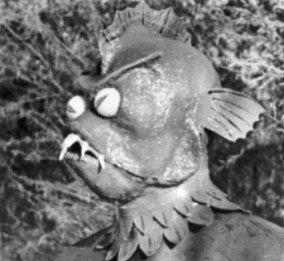
Bless you, my son.

The Amazing Transparent Man (1960) is the unhappy issue of a marriage between some good acting performances, competent special effects, and a poorly honed story that doesn’t understand – or perhaps have – its own thematic material. A master lock-pick is broken out of jail for reasons he doesn’t immediately understand. When he’s told he will be subjected to an X-Ray which will make him transparent, he tries to object but is bent to the will of the man who masterminded his breakout.

The script grinds through a mundane plot more concerned with the novelty of an invisible man than with possible moral questions which might arise. The lock-pick is a drunkard; the scientist in charge of the research is being blackmailed into doing the work; the “Major” in charge of the operation may be motivated by money, but there’s little to believe here (and this performance may be the worst of the lot, although I’ve seen far worse); and the motivations of the mandatory cute lady also appear to be monetary, although her unexplainable attraction to the fairly coarse lock-pick alters the equation – but not in a believable manner.

The acting performance are not bad, but the script is that sort of awful where you think it may have been a couple of revisions away from tolerable. Motivations are blurry but not mysterious; characters react in the wrong way, such as a guard who had been told his son was in prison in Europe – the lady’s word that his son is dead is good enough to sway his loyalties. The mysterious “Security” group, pondering the potentials of a transparent man, do not seem unduly put out, but instead I suspect they went out for a beer after determining they couldn’t possibly catch him.

So this sad little picture shouldn’t have been made, and it’s a tragedy if you see it.

Word Of The Day

Speciose:

(taxonomy) Rich in species, such as when many species are members of a single genus. [Wiktionary]

Noted on iNaturalist in their Birds of the World section:

In this vast world of ours there are over 10,000 species of Birds, which makes them the most speciose class of tetrapod vertebrates. This is what makes them so popular with bird watchers, along with there being so many different colors, shapes, sizes, sounds, behaviors, and ranges. With your help, together we can help the growth and knowledge of these amazing creatures! -John Fones

Iranian Politics, Ctd

Much like the bellicose conservatives in the United States, the hardliners of Iran are unable to accept that they are not the anointed of the masses. Rohollah Faghihi reports in AL Monitor on the objections of the hardliners to the results of the recent Presidential election won by Reformist and current President Rouhani – and, somehow, their objections sound faintly familiar:

In remarks published May 22 on the Telegram channel of the hard-line Raja News, Ebrahim Raisi, the leading conservative candidate in the election, asserted that the alleged violations were not of a limited scope and that he is pursuing the matter through the Guardian Council.

Moreover, Ali Nikzad, head of Raisi’s campaign, said that same day, “Seyyed Ebrahim is like a mother who left his baby to prevent him from being hurt, and the baby fell [into the hands] of the stepmother.” In other words, Nikzad is alleging voting fraud, but for the sake of Iran’s national security Raisi has not publicly announced anything — and that is why Rouhani is now president.

Raisi wrote a letter dated May 21 to Ayatollah Ahmad Jannati, the conservative chairman of the Guardian Council — the body tasked with vetting candidates and probing objections to voting results. In the letter, Raisi asked Jannati to look into violations of the law before and during the elections. He also attached 100 pages of documentation to supposedly substantiate his allegations.

On the same day, in an interview with the state-run Arabic news channel Al-Alam, Guardian Council spokesman Abbas-Ali Kadkhodaie rejected the notion that there had been major violations during the voting process, stating, “Though there were minor violations, fortunately the violations weren’t so important that they would compel us to stop the election process.” Moreover, in a short message published May 22 on his Telegram channel, Kadkhodaie advised Raisi and his supporters to accept the results of the elections.

A particularly striking echo:

… Hossein Shariatmadari — editor of the hard-line daily Kayhan — claimed May 21 that Raisi’s votes could have been twice that of Rouhani had it not been for “violations of the law” by the Rouhani-controlled Interior Ministry, which oversees elections.

An amazing assertion, isn’t it? But to the chagrin of the hardliners, the election of the relatively moderate Rouhani, rather than the more hardline Raisi, leaves in place the JCPOA (aka the Iran Nuclear Deal), and so the most easily understood result of recent years confrontation should remain inviolate – at least from that side of the table.

An immediate question is, of course, whether the current Trump Administration will “tear it up” as some of his rivals suggested, despite the judgment of most experts that it’s a good agreement. But I think a more subtle point, which this Administration may miss, is the continued and subtle influence on Iranian politics of previous Administration policies. Andrew Sullivan noted it in New York:

While Obama prudently leveraged the Shia-Sunni conflict by engaging Iran as well as the Sunni states, Trump has returned to the pro-Sunni and pro-Israeli playbook.

This was particularly weird on the same weekend that Iran — the focus of Trump’s ire — actually held an election, in which both men and women voted. Yes, of course, the choices were constrained by Tehran’s theocracy —but the reelection victory of Rouhani, the architect of the nuclear deal, was striking. Seventy percent of the country turned out, and Rouhani won by a near-20-point margin against his hard-line opponent. He has a mandate for more liberalization, and picked up momentum in the final weeks of the race by emphasizing more liberal themes. This is, of course, Obama’s long game vindicated. The former president gambled that by engaging Iran and getting a nuclear deal, he could buttress the resistance movement that fueled the Green Revolution, and slowly pull Iran back into a more moderate path. While the mullahs’ grip holds, it’s remarkable how successful Obama’s strategy has turned out to be:

Despite controlling most unelected councils, the conservative clerics and Revolutionary Guard commanders have suffered a string of political defeats, starting with Mr. Rouhani’s election in 2013. That led to direct talks with their archenemy, the United States, and ultimately to the nuclear deal, which they opposed. Then moderate and reformist candidates made strong gains in last year’s parliamentary elections.

While Trump is little influenced on a fundamental level by GOP kant concerning an evil axis and all that, he is influenced to the extent that he sees it enhancing his reputation and political position to pursue Iranian policies which demonize them and result in little more than confrontation and hostility. While this is one avenue for influencing the behavior of an adversary, it rarely works as well as one might hope, and given the Iraq War debacle, in which we learned that dictator Saddam Hussein had, in fact, destroyed all of his WMDs in response to the American invasion following the repulse of Iraq from Kuwait, and was nevertheless invaded, hunted down, and taken prisoner years later in the Iraq War … well, the point being that even kowtowing to the postures of a bully is not enough to save your skin – or that of your nation.

The subtle engagement pursued by Obama may lack the high drama of bombs dropped and lives lost, the funerals to attend, and the broken families, but it does appear to have the advantage of being effective. President Washington famously advised the avoidance of foreign entanglements, but care must be taken in understanding his meaning – a care I fear is beyond the capabilities of the current Administration. To my ear, Washington’s advice may be best taken to have allies and adversaries – but not friends and enemies. To understand the importance of discarding emotions, instead evaluating each country on its own terms, to understand how you need them to behave in order to maximize your own position, and to take the steps necessary to induce such behavior – not through noxious posturing on a national stage, designed to induce hatred in our own people, but through engagements with the country or countries in question, using both carrot and stick as appropriate and possible.

The demonisation of Iran, fair or not, merely offends a prideful (a word I use deliberately) nation capable of producing nuclear bombs and waging ruinous war. We can engage in real war, in a war of words – or a subtle war of economic pressures which leave their more savage members beaten by their own countrymen, starved of the attention they crave. Is this not a better approach?

But I do not think the Trump Administration has the capacity to understand such a politically mature approach.

That Terrified Of Ourselves?

Michael Harris, in “The New Science of Daydreaming,” (Discover Magazine, June 2017, paywall) notes how hard some of us apparently find it to be ourselves – a thought I almost can’t fathom:

“I’m sorry, Julie, but it’s just a fact — people are terrified of being in their heads,” I say. “I read this study where subjects chose to give themselves electric shocks rather than be alone with their own thoughts.”

It’s the summer of 2015 and the University of British Columbia’s half-vacated grounds droop with bloom. Julie — an old friend I’ve run into on campus — gives me a skeptical side-eye and says she’s perfectly capable of being alone with her thoughts. Proving her point, she wanders out of the rose garden in search of caffeine. I glower at the plants.

The study was a real one. It was published in 2014 in Science and was authored by University of Virginia professor Timothy D. Wilson and his team. Their research revealed that, left in our own company, most of us start to lose it after six to 15 minutes. The shocks are preferable, despite the pain, because anything — anything — is better than what the human brain starts getting up to when left to its own devices.

Or so we assume.

What the brain in fact gets up to in the absence of antagonizing external stimuli (buzzing phones, chirping people) is daydreaming. I am purposefully making it sound benign. Daydreaming is such a soft term. And yet it refers to a state of mind that most of us — myself included — have learned to suppress like a dirty thought. Perhaps we suppress it out of fear that daydreaming is related to the sin of idle hands. From at least medieval times onward, there’s been a steady campaign against idleness, that instigator of evil.

Is this really true? I’m well aware that I’m an introvert, if not a misanthrope (my Arts Editor ventures closer to that land than I do, but there are days I can see its misty headlands). But to not daydream – I find that hard to believe.

For me, daydreaming is where I find solutions to problems, and problems in solutions. It’s where the stories lurk, those to edify the audiences, and those to satisfy my ego. Drifting over the landscape of yesterday’s trivial adventures, sometimes I can see a theme from the vantage point of cross-connections.

And sometimes it’s merely reminiscing over old friends.

And I do believe it’s part of what makes for good software, when I do generate such. I’ve often said you’re just as likely to see my feet up on the desk as you’ll find me typing away. I’m actually fairly well convinced I don’t leave my feet up on the desk enough, sometimes. Hurried solutions are just bugs not yet found.

But on the other side of the table, what does it say when people cannot stand the idea of being alone with their thoughts? Never having watched people fall apart under torture of solitary confinement, I’m not sure how they really react, and from that derive sound suppositions. How life-like are dramas?

So let me speculate in computer terms. I’ve mentioned before (or should have) my musings that the current world-wide fascination with smart phones and texting and that sort of thing bears more than a passing resemblance to a distributed computing project, as the various nodes talk to each other, develop thoughts, do work, etc. Now, remove the hardware, and does it hold together?

Yes. Social networks are simply all of us talking to each other, bound by bonds of necessity, affection, mercantile, and others. And while we see ourselves as autonomous creatures, with clear boundaries and strongly held beliefs, it’s far more accurate that our interdependencies, our requirements of each other, define ourselves. (I think I’m echoing a fairly recent philosopher at this juncture, but I can’t think of whom, or where).

Now push this another millimeter along – just how much do we share? Take myself for an utterly trivial example – while in my youth I’d follow various sports teams, these days the best I can muster is a faint “good for them!” when the Minnesota Twins put together a win streak. If I wanted to be more a part of that particular bit of tribalism, I’d have to reach out on my network, find friends already involved in Twins fandom, etc. On the other hand, I can offer a lot in the area of UNIX software development, as well as glib philosophizing (as an acquaintance once emphasized in frustration).

So let’s move it to the classic conception – the hive mind. It’s not improper to suggest that various members of the human hive mind will have various and differing responsibilities, from the hunters and farmers, strong in their disciplines of food generation, to philosophers who (ideally!) are strong in the subtleties of morality, and all the other job responsibilities. This all just flows along.

So if we add in the reasonable supposition that some responsibilities will breed stronger minds than others – or at least minds more suited to such rigors as actually being alone – we might assume that, as a composite creature, some parts of the human hive mind will be dependent on others, just as I am dependent on others in the area of sports enthusiasm. As a more concrete example, some folks may have an inclination towards moral contemplation, while others just sort of go along with the flow in terms of moral behaviors, occasionally straying as opportunity arises.

Some of us know those folks, some of us are those folks.

So Michael’s article suggests there’s a great lie at the heart of the entire “autonomous” human. Our interdependencies are not merely of tangible goods and services, but of the entire gamut of moral, emotional, and intellectual realms, some unsurprising, some surprising, and no doubt some galling to the great adherents of the autonomy myth.

And I find it galling to think that most of us can’t stand being alone with our own thoughts.

Thousands Of Variants Of Donald Trump

If you enjoy applying classic scientific concepts to novel situations, then I must highly recommend this column by Janet Factor in The Flammifer. It was published back in August 2016 in a paper newsletter from the Center For Inquiry named Freethought In Action. Back then I just skimmed it and put it away for later examination, which has now arrived. First, she gives an admirably abstract and concise definition of the process of evolution (which will upset those folks who think evolution only applies to biological processes), and then she describes the candidacy of Donald Trump in evolutionary terms:

The Republican party is in disarray because its leadership has failed to grasp the fact that Trump is not interested in playing politics. Donald Trump is playing evolution instead. …

Now we can see what an enormous advantage a complete indifference to actualities is to someone generating political memes. Being willing to say absolutely anything enables one to maximize the number of variants produced; it removes any limit on the mutation rate and opens up many more avenues for movement more quickly. Even someone who is crafting convincing lies is at a disadvantage to someone who constantly and swiftly generates random changes of all sorts. The raw material of available elements is hugely multiplied thereby. …

When it comes to selection, Trump’s utter lack of consistency is an advantage. If an idea does not work for him, he immediately abandons it. He feels no need to defend any position. Far be it from Trump to sacrifice popularity for principle! He pours his energy into whichever random offspring multiply, and wastes none on making the case for those that falter. Thus he pays almost no price for mistakes, and never expends any political capital. There is no limit to his adaptability. Rather than struggling to overcome selective forces, he rides them wherever they go.

What an irony that so many of Trump’s supporters are creationists! He is living proof that a totally mindless process can lead to runaway success. Donald Trump is running a memetic evolutionary algorithm that is optimized to create mass appeal quickly. Does this mean he will inevitably win the presidency? No, but it means it may be incredibly hard to stop him. The usual tactics will not work, because he is not playing the usual game.

And, as we saw, he won by the slimmest of margins.

It’s one of those quietly marvelous columns which generates ideas hours after you’ve read it. I particularly like the schadenfreude inherent in the idea that the GOP, which generally rejects the idea of evolution, finding itself victimized, even destroyed, by a veritable avatar of evolution. While basic knowledge of evolution would not, on its own, have saved them from their fate, the inevitable accompanying devotion to tangible, reality-derived truth might have given them the inclination to demand Trump conform to the generally accepted norms of political campaigning – and not indulge, for instance, in fake math, which has now even leaked into Trump’s budget. In other words, they should have bounced him out on his ass as soon as it became clear he wasn’t a serious debater.

The loam of creationism does appear to be rich for Mr. Trump, but the garden plot of the credulous does have its limits. Janet closes with a warning:

This is a test of our success in educating and socializing our population to a level commensurate with continued civilization. If our failures in that effort over the last few decades have been too great, if in our complacency vigilance has flagged for too long, the ship of state will founder. There will be no “Women and children first!” this time. We will all go down together into waters icy, dark, and deep.

Trump’s election is not necessarily our doom. Outside of his little garden plot of sadly credulous supporters, his vast and continuous incompetence, dismaying as it is, is also exposed for all to see, thus depriving him of the soil he needs. I will borrow a philosophical concept to describe him, that of the tabula rasa, or blank slate, upon which many choose to read in him what they wish to see: white supremacism being victorious, American weakness being remedied, evil immigrants on the rampage. But his inability, even disinclination, to deliver on many of his promises must inevitably penetrate the consciousness of all but the most credulous & foolish Trump supporters – not as fast as I could wish, but with certainty.

Go read her column. If you don’t recall evolution so well, maybe refresh first on that.

Word of the Day

Invidious:

(of an action or situation) likely to arouse or incur resentment or anger in others.
‘she’d put herself in an invidious position’ [Oxford Dictionaries]

Seen in the recent Federal Fourth Circuit Court of Appeals opinion regarding the Trump Administration’s “Muslim ban” Executive Order:

Invidious discrimination that is shrouded in layers of legality is no less an insult to our Constitution than naked invidious discrimination. We have matured from the lessons learned by past experiences documented, for example, in Dred Scott and Korematsu. But we again encounter the affront of invidious discrimination—this time layered under the guise of a President’s claim of unfettered congressionally delegated authority to control immigration and his proclamation that national security requires his exercise of that authority to deny entry to a class of aliens defined solely by their nation of origin. Laid bare, this Executive Order is no more than what the President promised before and after his election: naked invidious discrimination against Muslims. Such discrimination contravenes the authority Congress delegated to the President in the Immigration and Nationality Act (the “Immigration Act”), 8 U.S.C. § 1101 et seq., and it is unconstitutional under the Establishment Clause.

Is It Too Bad?

Politico is reporting that, if Senator Orrin Hatch (R-Utah) decides to retire, Mitt Romney is not going to run to replace him:

On Wednesday the website UtahPolicy floated the likelihood that the 83-year old Utah Republican would retire and Romney would run to replace him. That prompted pushback from the GOP’s most senior senator, who is also in the line of presidential succession.

“I’ve talked to Mitt Romney. He’s not going to run for this seat. I would be glad for him if he would,” Hatch told reporters.

The Democratic presence in Utah is fairly small, as Clinton was walloped, winning only 27.5% of Utah voters (most of the rest went for either of the Republicans in the race, Trump and McMullin). Similarly, all the Senators and Representatives to Congress from Utah are also Republicans.

So is it too bad? His Presidential campaign was not a thing of beauty, as he was caught spouting off embarrassing GOP kant regarding the how welfare recipients will always vote. But I also recall that he was also the successful governor of Massachusetts, and his father the successful governor of Michigan. What does this mean to me? It means there’s a possibility that Mitt, for all his privilege & wealth, may have a clue there’s more to running a government than reading fringe websites and thinking there’s valuable information to be found there, or just apply principles learned in business and away you go.

He may have an idea of how to be responsible & successful at governance.

So, in the absence of a candidate obviously cognizant of the requirements of good government, there has to be some regret that someone who might have a smidgen of an idea of how to govern has decided not to run. And wonder at just which flake the GOP will choose to run to succeed Hatch.

Creeping Disappointment

Like most folks (I hope!), I diversify my sources of advice and ideas when it comes to investments. My first source is my financial advisor; my third source is my random readings, where I keep a weather eye out for ideas, whether it’s new science with commercial possibilities or pure commercial news and rumors.

And that second source I so blithely skipped over? The Motley Fool.

I ran into TMF many years ago, back near the start of their site. I stuck around for several reasons (and I apologize for the mix of tenses):

  1. They didn’t seem to hype stocks. They certainly had their recommendations & favorites, but they also had criteria, publicly shared and understandable, for holding and folding – and they took it seriously. It seemed – and seems – far more reasonable than other stockpickers who seem to pull predictions out of their asses. Indeed, they built philosophies of investing – and subjected them to actual analyses to evaluate their potential for successful prediction.
  2. Unlike most competing agencies, they were – and still are – advocates of the long view of investing. They are buy and hold investors, with time horizons, for the most part, at a minimum of five years, and in some cases far longer. Not that they don’t sometimes point at short-term opportunities, but they approach such opportunities with both practical and philosophical caution.
  3. Related to the previous point, they were unreformed contrarians. The wisdom on the street didn’t impress them. Technical investing, based on possibly meaningless patterns in buy and sell orders? They ridiculed it. They preferred to assess fundamentals, both in terms of how the businesses were run, and the markets they were in. They pointed out that while you might get lucky in short-term investing, the brokers you’re using don’t need luck – all they need is you to try your luck, and the brokers make their money on the fees charged for making the trades. Why pay fees for many, many buys & sells when you can buy and hold – and avoid the fees (and taxes on short-term gains is higher than long-term gains)? Issues such as these, where they raised questions about dominant trends and suggested answers that could be considered at leisure, made them quite attractive.

TMF currently has, I believe, a public side to their site, but the value is in the services they offer for sale – Stock Advisor, Hidden Gems, Rule Breakers, etc. These are structured around specific investment strategies, and often their own money is invested next to your’s.

I continue to use them, but over the last few years I’ve had a feeling of creeping disappointment. Why? Changes in how they seem to reach out to the public.

For a long time, I suppose as they built themselves from a two man operation selling their chutzpah at stock recommendations (maybe I was naive to think it was a couple of guys – and some technical support – with a good idea), it really felt like a couple of guys who brought fresh thinking to the question of how to invest in the stock market, looking at each facet of the traditional investment model with skeptical eyes that, like children at a magic show, weren’t distracted by the bright lights, but saw the magician slip the ball into a pocket while staring up at the imaginary ball[1].

But now?

Honestly, now I apply that same skepticism (and my own home-grown bottle) to their advertising. From a recent mailing for their Motley Fool Explorer service:

You might have heard of Motley Fool Explorer. It’s quickly become one of the fastest-growing services in Motley Fool history for good reason.

The Explorer team conducts boots-on-the-ground research every month to identify the David Gardner stocks they think are poised to profit from the market’s most promising trends.

Fastest-growing meaning what, exactly? Ah, I see.

I should follow the herd. Otherwise, I may lose out.

And that is exactly what the Gardner brothers warned against when they first started out – herds of sheep get sheared, after all.

Another marketing tactic, for which I don’t happen to have a solid example (that mail was deleted) has to do with “seats” – open slots in a service. The new seats are going fast, and once they’re gone, the service will be closed to new members at least until next year. This is the sort of marketing hype meant to instill anxiety in the inexperienced investor. It’s a fight or flight response, meant to hit a reflex and get a profitable response, rather than appeal to the rational mind. That appeal to the rational, DIY approach to investing was the main attraction for them all those years ago. You could analyze their arguments, see their insights, and incorporate their strategies into your own approach. But this … marketing hype? It’s not designed to appeal to the intellect, but to suck in investors who may not be prepared for the situation. Add in such marketing copy as,

That’s because they know David’s track record for calling trends is legendary in this industry. Since 2002, he’s made 140 recommendations that have more than doubled in value… and 21 recommendations that have returned more than 1,000%!

Those kinds of 10x, 25x, and even 50x returns are possible only by spotting the market’s biggest waves.

And it just adds to the fight or flight response by appealing to the reputation of David Gardner. Not his ideas, but his results. And I know the Gardners will give you the documentation proving these claims – I’ve seen many of them happen, such as AOL and Amazon (but too bad for me, I didn’t act on those recommendations). But – it’s a bit of a magician’s trick. There’s no mention of the emotional stability required for this investment strategy, because they are making riskier bets and they sometimes have to stick to a stock like glue before it pays off years later. Nor do we get any feeling for his recent record. Did he get off to a hot start and then tail off? I can’t tell, and while I think he’s still making good calls, I can’t really be sure – and certainly the novice investor won’t even know to ask that subtle question. No, the advertising for these services makes it sound as smooth as silk.

And then there’s the follow-up emails. “Yes, your opportunity closed at midnight last night, but this morning we got a few sad calls from desperate investors who missed the boat, and so here’s one last chance to get a crippled entry into the service! Quick, call us at once!” Now this is just a bit slimy. Other people had regrets – maybe you should, too! Did you see the sheep go walking by?

Yeah, the follow-up emails are really the worst of the lot. Sure, maybe they’re in earnest – but even for a trusting guy like me[2], the red flags come popping out so hard it makes my head jerk. After all, sending out these final e-mails cost a few pennies, and writing the marketing copy that fills them isn’t going to be more than a $1000. And the emotional manipulation is fairly blatant. It has all the signs of being all about the money.

Now, I’m sure my more jaded readers are shaking their heads and asking why I’m bothering to even read these promotional mails if I don’t like them. Here’s what you need to understand:

I like the Fool. They’ve given me a lot of good stock ideas, and I appreciate that. And I appreciate the culture of their early business they built, based on the foundation of their philosophy. They’ve tried to build a community based on mutual aid and information exchange, and having done that myself in the ’80s in the BBS world, I understand how satisfying it can be to see people exchanging ideas and wisdom and learning and knowing you were part of making that happen.

But now I’m seeing this marketing blitz which, frankly, is at odds with their earlier methods of sharing their philosophies, insights, even ethics. And a marketing blitz which relies on hitting emotional reflexes is not a particularly ethical operation. It may be standard in the industry, and I understand, I really do, using their successes to build the business. Heck, I suppose they’re just trying to monetize their business. I understand that’s a typical maneuver, try to leverage the business as much as possible.

But it doesn’t feel like they’re really running ahead of the industry in the area of marketing. What do I know? Nothing. I am neither a marketing nor investment professional; I’m a software engineer who, to be bluntly honest, has sometimes treated investing as more of an entertainment than anything else. I couldn’t tell you the difference between cash flow and profit. (I read about them, recognize the difference, but five minutes later it all flees my brain.) I’m far more of a story guy, who appreciated the story of Amazon way back when, but was too shy to follow through.

But I worry about the Fool. Will this marketing effort, which strikes me as on the border of unethical, if only in my world, seep into their stock-picking operations? This is some matter of concern to me – maybe because I’m an ignoramus.

I will probably stick with the Fool, even though I’m not the active investor I used to be – I tend to stay within the ruts. But every time I receive one of these mails promoting their new services, I shudder. And wonder.


1Magicians find children their hardest audience, as one told me years ago – they don’t know they’re supposed to be distracted by what distracts adults.

2My wife tells me at least once a month that I am too eager to believe the best of people. Of course, she’s a cynic from Chicago, so I know she knows better and is just following her training.
Is It Still Team Politics?, Ctd

In case  you missed it, Gianforte won the race for the empty lone Montana House of Representatives seat. FiveThirtyEight’s Nate Silver notes vote finalization takes a while in Montana:

Gianforte leads by about 7 percentage points as we wrap up this live blog. The numbers will shift around a bit — Montana takes a long time to finalize its vote — but we should wind up somewhere in that range, which we can call the mid-to-high single digits.

CNN shows a 6 point gap, with 5.7 points to the Libertarian candidate – Gianforte is at 50.1%. CNN’s Lauren Fox comments:

But Montana’s election may be an unreliable arbiter of what’s to come in races across the country. After all, the race here featured a banjo-playing, first-time Democratic candidate, and many of Montana’s voters cast absentee ballots before the alleged assault even took place. The events that transpired here won’t be easily replicated.

“All politics are local,” said Art Wittich, a Gianforte supporter. “It comes down to two candidates.”

Perhaps Quist didn’t have what it takes to be a good candidate. After all, being a folk singer is not the same as being an experienced politician.

So now it’s up to Gianforte to prove he’s not another GOP zombie, that he’s not joining the Gohmert/Roby/Ryan crew to vote in solid lock-step with the GOP dictates. It’s so easy, when you’re not sitting in that hot seat, to say this:

… Gianforte didn’t fully embrace the Republican House-passed bill from the beginning, arguing it was rushed and not fully baked. His own campaign staff said Gianforte wouldn’t have voted for it.

It’s quite another to actually have to face the pressure of a vote and the angry glare of the GOP whip. So will Gianforte exercise his best judgment and vote against legislation which is bad for America?

Or will he just be another zombie GOP member and betray Montana in the process?

Mindset Has A Lot To Do With It, But Sometimes It Can’t Be Changed

Steve Benen on Maddowblog is appalled at the remarks of Ben Carson, Secretary of Housing and Urban Development:

Carson said it’s mind over matter. “I think poverty to a large extent is also a state of mind,” said Carson. “You take somebody who has the right mindset, you can take everything from them and put them on the street and I guarantee you in a little while they’ll be right back up there. And you take somebody with the wrong mindset, you can give them everything in the world, they’ll work their way right back down to the bottom.”

This is not an argument that anyone should take seriously. The causes of chronic, generational poverty are complex, but “the wrong mindset” isn’t among them.

Except that it does, if you accept the hypothesis that racism has been a factor in generational, chronic poverty – so that it’s not the mindset of the victims so much as the shared mindset of the victimizers, whether it be actively malicious or just the go-with-the-flow folks.

All that said, Dr. Carson should probably recognize that some mindsets are not currently changeable. Those who are brain-damaged are certainly going to have more problems than those who are not. Given the number of homeless veterans on the streets, perhaps Dr. Carson should make it his number one priority to advocate against war.

Is It Still Team Politics?

Greg Gianforte, candidate for the empty Montana seat in the House of Representatives, has been charged with assault on the day of the special election. The Guardian reports on the incident, including reactions of Fox News reporters on the scene:

“He took me to the ground,” Jacobs said by phone from the back of an ambulance. “I think he wailed on me once or twice … He got on me and I think he hit me … This is the strangest thing that has ever happened to me in reporting on politics.”

Fox News reporter Alicia Acuna, field producer Faith Mangan and photographer Keith Railey witnessed the incident at Gianforte’s campaign headquarters in Montana, according to an account published on the Fox News website. After Jacobs asked Gianforte his question, Acuna wrote: “Gianforte grabbed Jacobs by the neck with both hands and slammed him into the ground behind him.

“Faith, Keith and I watched in disbelief as Gianforte then began punching the man, as he moved on top the reporter and began yelling something to the effect of ‘I’m sick and tired of this!’ … To be clear, at no point did any of us who witnessed this assault see Jacobs show any form of physical aggression toward Gianforte, who left the area after giving statements to local sheriff’s deputies.”

Jacobs subsequently reported the incident to the police. The Gallatin county sheriff’s office said on Wednesday night it had completed its investigation and that Gianforte had been issued with a charge of misdemeanour assault.

RawStory follows up on Fox News:

On Fox & Friends, however, Mele simply repeated the Gianforte campaign’s talking points by noting that “the candidate says that reporter tried to push a phone in his face before this happened” and that “Gianforte’s campaign says the men both fell.”

The network also ran a chyron that simply read, “Gianforte blames reporter for incident.”
Report Advertisement

Later on Fox & Friends, co-host Brian Kilmeade did reference Acuna’s report on the incident — but he never talked about its contents or the fact that it completely contradicted the Gianforte campaign’s spin.

Their founder may be dead, but his spirit lives on. Mediaite notes the reaction of pundit Joe Scarborough:

“All three papers overnight took their endorsements away from this Republican guy,” said Scarborough. “It’s that incredible. A guy assault a reporter, which I guess shouldn’t be too surprising in an age of Trump where he calls the press ‘enemy of the people.’ These reckless words have consequences.”

“This candidate had also said things sort of Trumpian about the press,” offered Willie Geist for the assist.

Weirdly, I wonder if this will play well with the GOP base. There has been a current of fury in the past campaign season, enough so that the spats of violence reported at some events were not negative, but rather positives for Trump. Given Gianforte is a Trump supporter, it suggests this could even be a planned incident – trade a misdemeanour assault for building street cred with the base. I haven’t paid much attention to the Montana electorate, not living there, so it’s hard to say if they lean that way, or if the endorsements of the major newspapers, snatched away overnight, will have any influence on the election.

This will be a major marker as to whether the American electorate is transmuting from the traditional ways of evaluating candidates – or staying with tried and true values. If the former, GOPer Gianforte wins and we enter a more violent stage of our Republic;  if the latter, Democrat Quist wins and we back away from a nasty little precipice.

Stay tuned. Today’s the special election.

This Really Must Stop

He’s really a child, isn’t he? CNN:

UK Prime Minister Theresa May said Thursday she would raise leaks to US media from the Manchester bombing investigation with US President Donald Trump when the pair meet later at a NATO summit in Brussels, Belgium.

“I will make clear to President Trump that intelligence that is shared between our law enforcement agencies must remain secure,” she said, following a cabinet-level security meeting.

The United States has faced growing criticism from UK lawmakers over the leaks, amid concern they could disrupt the fast-moving investigation into Monday night’s attack against concertgoers at Manchester Arena.

I realize it may not be Trump, personally, doing the leaking – but, even so, he sets the tone. Worse yet, it’s easy to suspect members of his Administration are leaking this information in order to advance their political agenda – because that’s the kind of people he’s hired, politicos who think the world revolves around their agenda and will use anything to advance it against their foes, who just happen to be their fellow Americans.

The tragedy of the Manchester bombing should not be permitted to distract from the dangerous meltdown which is the Trump Administration.

BTW, shortly after Obama had taken office, someone bought some time on a highway billboard, on which they put Bush’s face and the message, “Miss me yet?” I’ve always thought that was a sincere, if misguided message. Repeating that with Obama’s face would be far more effective, and remind us of just what professionally run government looks like – no scandals, just trying to improve life.

Word Of The Day

Recondite:

1 : difficult or impossible for one of ordinary understanding or knowledge to comprehend : deep a recondite subject

2 : of, relating to, or dealing with something little known or obscure
recondite fact about the origin of the holiday — Floyd Dell

3 : hidden from sight : concealed

[Merriam-Webster]

Noted in “Odds on: 10 science breakthroughs you can bet on,” Michael Brooks, NewScientist (13 May 2017, paywall):

Alien contact at least has a protocol: it must be confirmed by the US President or UK Prime Minister. Policing more recondite bets can be tough, though. “Say we were to take a bet on there being more to evolution than genetics,” says Sharpe. “Who’s going to chair that debate?”