The Neat Things Your Body Can Do

NewScientist (28 July 2015, paywall) reports on the capabilities of an excited human cell:

[Matjaž] Humar and his colleagues developed three ways to get cells to emit visible light. The first involved injecting each one with a tiny oil droplet, forming an optical cavity which could be filled with fluorescent dye. Shining a light pulse on to the cavity excited the dye atoms into emitting light in a tightly focused beam. …

Tagging cells with fluorescent dyes is a common and relatively easy way for researchers to label cells by getting them to emit light, but this produces a relatively broad range of wavelengths, making it difficult to distinguish between differently tagged cells.

However laser light is characterised by having an extremely narrow range of wavelengths. That means it is theoretically possible, using these new techniques, to give every single cell in the human body a unique, identifiable laser signature, Humar says.

The Cost of Purity

CNN reports President Obama has compared the GOP to the hardliners in Iran:

President Barack Obama is standing by his comparison between Iranian hardliners and Republicans who he says are dead set on derailing any nuclear deal.

“What I said is absolutely true, factually,” Obama told CNN’s Fareed Zakaria in an interview that will air in full Sunday.

“The truth of the matter is, inside of Iran, the people most opposed to the deal are the Revolutionary Guard, the Quds Force, hardliners who are implacably opposed to any cooperation with the international community,” Obama said.

This is rather interesting since the GOP is also a party that is suffering declining popularity, even as it continues to dominate the legislature, as we see here.

I put the GOP’s faltering partially to their use of RINO, as I noted in an unrelated post here:

Well, ever hear the acronym RINO?  It’s Republicans in Name Only, and is used by conservative Republicans against the moderates to chisel them from the mainstream of the party, and then eject them into the formless political void.   I’ve become convinced that it is one of main operational mechanisms that is “purifying”, if I may use the term without laughing, the GOP into nothingness, splitting off non-conforming members on less and less significant features until all the RINO-users are pointing at each other, spitting their potent curse in confidence; ideological purity, to use Mr. Brodsky’s fine phrase.

Well, most interestingly is this article, from AL Monitor‘s Rohollah Faghihi:

Larijani, known as a moderate conservative, has been chairing parliament since 2008. Following the disputed 2009 presidential election and its violent aftermath, Larijani was labeled as “the silent man of sedition” by hard-liners who charged that he was refraining from condemning the protests. Today’s conservative camp, which is increasingly defined by its hard-liners, has seen many of its senior members separate from it in past years. These include Ayatollah Hashemi Rafsanjani, chairman of the Expediency Council; Ali Akbar Nategh-Nuri, head of the Supreme Leader’s Inspection Office; and President Hassan Rouhani, a moderate conservative who remains loyal to his longtime patron, Rafsanjani.

Rafsanjani and Nategh-Nuri have been the target of conservative infighting. Both were initially marginalized by hard-liners who supported Mahmoud Ahmadinejad against Rafsanjani in the 2005 presidential election. But that wasn’t the last of it. In the televised presidential debates with candidate Mir-Hossein Mousavi preceding the 2009 vote, Ahmadinejad accused Rafsanjani and Nategh-Nuri’s sons of corruption on live television. After these accusations in front of millions of Iranian viewers, neither Rafsanjani nor Nategh-Nuri were supported by their old conservative friends.

These incidents point to an overarching trend over the years — more moderate figures have been forced to part ways with the conservative camp. As a result, the latter is now dominated by hard-liners. This trajectory was accelerated under Ahmadinejad, who strengthened hard-liners more than at any point in the history of the Islamic Republic.

Bolded by me.  So the Iranian hard-liners engage in their own version of purification, achieving a higher level of obdurate agreement at the expense of fewer voices, and probably less sympathy from the populace.  One wonders how far it’ll go.  From another AL Monitor article:

One of these figures is Seyed Morteza Rashidi, who is based in the holy city of Qom. Since the conclusion of the nuclear deal earlier this month, Rashidi has lashed out at Rouhani and the negotiating team — including Foreign Minister Mohammad Javad Zarif and Deputy Foreign Minister Abbas Araghchi — in over 20 Facebook posts. He argues that “the Islamic Revolution is now controlled by those who do not even believe in its principles, but are also as Westernized as one can get.” One week after the agreement was struck, Rashidi wrote on his Facebook page: “The deal, signed by enemies of the Revolution, is legally too flawed. It seems that Iranian negotiators are either traitors or uneducated individuals.”

Rashidi often fills his page with quotes and pictures of Supreme Leader Ayatollah Ali Khamenei. There are numerous other pro-Khamenei young people active on social networks, many of whom say they don’t fit into any Principlist grouping. They say they follow the path of “Imam Khamenei” and that they’re willing to give their lives for him.

So, if the treaty is approved by Supreme Leader Khamenei, will he be the next one boosted out of the Conservative camp?

The unwillingness to compromise, the certainty of the rightness of their positions in a situation in which even the most skilled and knowledgeable experts will acknowledge a basic uncertainty – this phraseology could be applied to the Iranian hardliners or the GOP with equal facility.

The mark of political immaturity?  Obduracy.  Political maturity?  Reserve judgment, ask pointed, relevant questions about the critical matters – and if the answers are satisfactory, vote for it, and if they are not, vote against it.  Use it to play political games, to achieve evanescent political superiority?  A waste of opportunity to make real progress.

So, Oral Sex is Islamic?

At least they talk about it.  International Business Times touched on it:

Popular Turkish Muslim televangelist Ahmet Mahmut Ünlü wants to set the record straight by refuting the comments made by noted Islam expert Ali Riza Demircan, who claimed that “advanced oral sex” was a forbidden act under the Islamic religion. Ünlü says the Quran does not stipulate anywhere that oral sex is illegal.

“Do not invent a lie on behalf of Allah,” Ünlü, known more commonly as Cübbeli Ahmet Hoca, told viewers of his televised sermon, according to Turkish newspaper Hürriyet Daily News. “Brothers, let’s speak frankly: [Islam’s] Shafi’i sect allows this act, as it considers human semen a clean substance,” he said, adding that though the Hanafi sect does claim that semen is dirty, the act of oral sex is not.

Last week, a conversation about religion between television host Pelin Çift and Demircan deviated when Demircan delved into what sexual practices were deemed haram — or forbidden — under Islam during a program on a state-run television channel. Demircan declared “advanced oral sex” was one of them, along with anal sex and other “sadistic sexual acts.” Demircan said that engaging in these acts, even between married couples, is considered haram for Muslims.

Reportedly, his co-host on the show had some problems with the topic, reports the Hurriyet Daily News:

Speaker Pelin Çift burst into laughs when she confronted with the sudden bombardment of sexual references during the talk on religion which had been progressing somberly by that time.

“You see, Sister Pelin, you had been talking so comfortably. Now you are not able to ask a question,” Demircan told the speaker as she laughed.

“Do you know what my problem is?” the theologian continued. “For God’s sake, my hodja, what’s your problem?” Çift answered.

Pinar Tremblay at AL Monitor troubles herself to go a little further:

The most popular reaction, however, came from another Islamic personality, Robed (Cubbeli) Ahmet Hoca. A senior figure in the Ismail Aga religious order, Ahmet Hoca is known for his love of the limelight and controversial remarks. …

Ahmet Hoca’s blessing of oral sex generated another round of satirical exchanges on social media, and before one could declare the discussion over, Demircan came back with a personal retort against Ahmet Hoca, saying, “After the TRT program, I received several thank you notes and prayers. I am delighted to contribute to the understanding of what is forbidden. This is a crucial matter as it leads to conflict among couples and even to divorce. When we speak of what is forbidden, I understand those in denial, those who are engaged in extramarital affairs, gays, lesbians, erotic site owners and [sex toy] salespeople to be disturbed, but I don’t understand short-sighted Muslims. Are they disturbed by being reminded what is forbidden in Islam because they are committing these sins?” …

Indeed, these sexual debates offer intriguing clues about the social, economic and political values in contemporary Turkish understanding of religion. As the marketplace of religious orders has grown, televangelists or sheikhs from these orders have become much more tolerated in the public domain.

Al-Monitor contacted several theologians and government imams from the Religious Affairs Directorate (RAD), but they were unwilling to comment. One scholar said, “You should not write about oral sex. It will hurt your reputation.” When asked how respected religious elders can discuss the issue so freely, the scholar replied, “They are all men, occasionally a few older women. Young women should not speak about these matters.”

Indeed, the scholar has a point. Speaking about sexual matters in Turkey is another field, like security and military politics, reserved for men. Although it may seem progressive to be talking about sexual matters in public, it is more an issue of men preaching to younger men and women about what is permissible, not an open debate. Hence, all women are pretty much expected to do is giggle nervously and look sheepish or shell-shocked. The host Cift is an exquisite example of the immature standard set for women in this regard.

So for all the discussion of oral sex (although apparently never really defined), the role of women remains as the passive recipient.

Belated Movie Reviews

Whilst loitering ill in my ol’ comfy chair,
What didst I espy,
But an old, creepy movie
Glorying in all black and white!

The Vampire Bat (1939),
With stars of yore,
Such as Wray, and Atwill,
Douglas and Eburne!

Prepared was I, for another drear’
Plot, executed with no excitation or bon
Mot, but only to accumulate
A little more green to buy more rear.

So much was the surprise,
Not a character of cardboard,
Faces of character,
Characters … memorable!

Indeed, such a lovely twist,
To please this fevered brain,
I can only give,
Three stars out of four!

(The sound editor should have been shot!)

Fuzzy Math: Assailing Baby Boomers

In a recent article by Melissa Healy of the Los Angeles Times (and syndicated to other newspapers like the Minneapolis Star Tribune), she lays out a horror story about Alzheimer’s.  She writes:

Over the next 35 years, about 28 million baby boomers will likely develop Alzheimer’s disease, and the annual bill for their care will balloon from $11.9 billion in 2020 to more than $328 billion in 2040, says an analysis released last week.

Those numbers do not pass the smell test — at all.  I’ll show you why in a moment.  Clearly one of two things happened.  Either reporter Healy paraphrased what the analysis really said, and distorted the accuracy of the data in the process (possibly by attributing all Alzheimer’s cases to baby boomers, and not to the entire population).  Or Healy didn’t do adequate fact checking, and the analysis itself is completely bogus.

Why?  Let’s look into the numbers a bit.

Baby boomers are those Americans born between 1946 and 1964.  According to the Census Bureau, there were a total of 76 million births during those years.  (Strangely, when I add up the births per year for each of those years, I get about 74 million when rounding to the nearest ten-thousand.)

A first “smell test” or “do the numbers even make sense” question would be to ask, could there really be 28 million out of 76 million people getting Alzheimer’s disease?  That’s an astonishing 36.8%, more than one in three, people will develop Alzheimer’s over the next 35 years!  It’s an epidemic!  Or is it?

The same organization that provided the numbers used by journalist Healy also says this (PDF):

  • 11 percent of people age 65 and older have Alzheimer’s.
  • 32 percent of people age 85 and older have Alzheimer’s.

Even if you believe those above numbers, there’s no way to get to 36.8% of 76 million baby boomers.  First, 11 million of those 76 million boomers had already died by the year 2012.

Inconveniently, we also had just over 11 million immigrants of the same age, so we were at about 76 million (76.4 to be more exact) baby boomer aged people living in the USA — in 2012.  Do all immigrant baby boomers get Alzheimer’s?  Something is needed to pull the average up.

The average lifespan for baby boomers ranges from 62.9 years to 69.7.  Over those coming 35 years when this Alzheimer’s epidemic among baby boomers is supposed to occur, what age will boomers be?

In 2015, the oldest were 2015 minus 1946 equals 69.  Already the oldest were at the average age of death.  The youngest were 2015 minus 1964 equals 51.  Most of the youngest can be presumed to be still alive.  Since it’s an average age of death, not a median, we cannot literally say half of the oldest are already dead, but certainly a significant number are.

In 35 years, in 2050, when we will allegedly have had 28 million baby boomers develop Alzheimer’s, the oldest boomers will be 2050 minus 1946 equals 104.  Oh hey, I’m sure there will be lots of those!  And the youngest boomers will be only 2050 minus 1964 equals 86 — for a group of people who on average die at age 66.9 for men and 73.7 for women.

So how many baby boomers will even be alive in 2050?  Some estimates put that number at about 18 million.  There’s only about 75 million alive today in 2015.  By 2028, the number is estimated to fall to 65 million.

Clearly there cannot be 28 million baby boomers with Alzheimer’s in 35 years (2050), since there will be far less than that number even alive.

The only ways to get to 28 million baby boomers with Alzheimer’s disease over the next 35 years is to assume nearly all of the boomers alive today in 2015 will live to be 85 years of age, far exceeding all the actuarial table estimates.  Or that Alzheimer’s will actually cause the death of more than a third of those alive.

All the numbers say that heart disease, lung cancer, lung disease, diabetes and strokes lead that hit parade, though.  For adults over 65, Alzheimer’s comes in number 10 behind 9 other deadly causes.

Clearly that 28 million baby boomers with Alzheimer’s number is bogus.

How did it get that way?  Maybe it was meant to be 28 million newly diagnosed cases of Alzheimer’s over the next 35 years in US residents of all ages, not just boomers?  Or even adult residents, since over 35 years, a lot of Generation X will become senior citizens, and even Millennials will be hitting late middle age.  Or maybe the Alzheimer’s Association’s math is a bit fuzzy, and in calculating that number, they mixed apples and oranges because it looked so impressive.  Likely it’s to the Association’s advantage to have bigger numbers.

Regardless, even without doing all the math above, 28 million out of 76 million adults alive today are not all going to develop Alzheimer’s.  It’s that simple.  It fails the smell test.

Capitalism: The Continuing Crisis

Pope Francis, the latest in a series of pontiffs, did not write this:

Which of these two (real) companies would you invest in?

The first boasts in its annual report that it has a single goal: “Maximizing shareholder value.”

A few lines later, it promises: “We are deeply committed to building the value of the Firm … in everything we do, we are constantly identifying and evaluating ways to add value.”

After discussing ways to boost the company’s share price in a conference call, the CEO emphasizes that “our goal is simple; that’s to create value for our shareholders.”

The other company takes a different approach.

Its annual report states that the business “was not originally created to be a company.” Customers who are key to its future “believe in something beyond simply maximizing profits,” it reads.

Its CEO once stated bluntly, “We’re definitely not in it for the money,” and admitted to a friend that “I don’t know business stuff.”

One analyst wrote that management simply “doesn’t care that much about making money.”

This is actually, if I recall properly, a bit of promotional mail from The Motley Fool‘s Morgan Housel, a financial columnist who I occasionally read but do not follow, despite finding his writing appealing.  And the thesis of this column is appealing, too.  The first company, it turns out, is the infamous Lehman Brothers, a financial services firms that went suddenly bankrupt during the recent Great Recession.  The second is … Facebook.  Now reportedly making millions of dollars.

Housel goes on:

Companies that focus on profits often lose customers, while companies that focus on customers often find profits.

As much as I want to believe in the thesis, my contrarian side simply notes that Lehman Brothers was a financial services company.  They were about money – from whom to borrow, to whom to lend, where to invest.  This is all about money, and their statements reflect that.  The fact of their failure doesn’t mean their basic commitment of return on investment was wrong – it may mean they were simply incompetent in managing a business in a sector which has proven to be more and more difficult to successfully navigate (and so incompetent may be an unkind, even harsh word for folks who were inadvertent explorers, and were eaten by dragons).

His contrasting example, Facebook, went public in 2012.  Think of that.  His example has been public for three years, and while successful in that time frame, three years doesn’t make for a market dominating monolith like, say, Coke, or Berkshire-Hathaway.  It’s a services company, not something making useful tangibles with a large moat, and frankly Facebook doesn’t inspire great love – I find it annoying in many respects.  And I expect if the right new service company came along in the future, Facebook might become a ghost town.  Remember Eastman-Kodak?1

This weak article is all the more unfortunate as it comes in the context of Pope Francis’ remarks about capitalism:

And behind all this pain, death and destruction there is the stench of what Basil of Caesarea called “the dung of the devil”. An unfettered pursuit of money rules. The service of the common good is left behind. Once capital becomes an idol and guides people’s decisions, once greed for money presides over the entire socioeconomic system, it ruins society, it condemns and enslaves men and women, it destroys human fraternity, it sets people against one another and, as we clearly see, it even puts at risk our common home.

Whether or not you’re Catholic (and I’m agnostic), the Pope’s remarks concerning a dominant economic systems are worth reflection.  Once capital becomes an idol is a lovely way to remind the learned2 that the economic system should be our servant in the pursuit of larger, worthy goals – not our master that oppresses us.  Morgan had an opportunity to reflect on the proper role of capitalism (or even any economic system) within society, how to interpret it for the benefit of investors – and missed it.  Tying it in with Pope Francis’ remarks would have brought extra leverage to the argument.  I regret his unforced error.3


1 I am not directly invested in any of the companies mentioned in this post.
2 We’ll skip the poseurs whose single lesson from their economic studies is that regulating business is bad for business and therefore shouldn’t be permitted.
3 Perhaps someday I’ll work up the hubris to take a shot at it.

The Iran Deal Roundup, Ctd

Just as hardliners in the United States are loathe to give President Obama his diplomatic achievement, Iranian hardliners also do not like the deal.  The Blaze reports the comments of the commander of the Basij:

“Any Iranian who reads the Vienna documents will hate the U.S. 100 times more (than the past),” the commander of Iran’s Basij forces, Brig. Gen. Mohammad Reza Naqdi said, according to Iran’s Fars News Agency.

Naqdi asserted that the U.S. would use the agreement as a pretext to continue pressuring Iran.

“The U.S. needs the agreement merely to legalize the sanctions and continue pressure against Iran,” he said. …

The Times of Israel reports the another remark from Naqdi:

The nuclear agreement reached between six world powers and Tehran treats the Islamic Republic unfairly and will only increase anti-American sentiment in the country, a top Iranian general said Tuesday, according to state-run media.

A day after the United Nations Security Council adopted the pact amid recriminations from senior Iranian hard-liners, Gen. Mohammad Reza Naqdi claimed Washington was using the accord as pretext for a future US military strike against Iran.

The command of the Revolutionary Guard is also upset:

Major General Mohammad Ali Jafari, head of the powerful Islamic Revolutionary Guards Corps told the Iranian news agency Tasnim that “Some parts of the draft have clearly crossed the Islamic Republic’s red lines, especially in Iran’s military capabilities. We will never accept it.”

AL Monitor‘s Alireza Ramezani summarizes one the hard liners may really fear – the return of the Reformist movement in Iran:

“Only military figures or those close to military circles have mainly been critics of the deal so far,” a political journalist in Tehran, who asked not to be named, told Al-Monitor.

Indeed, the harsh — but apparently finely calibrated — objections to the nuclear agreement seem to be aimed more at pressuring Rouhani than at the deal itself. This is not surprising as the accord will — economically speaking — bring benefits for virtually every group and faction. The agreement has averted possible war and could bring billions of dollars in foreign investment into the struggling economy, which is largely in the hands of conservative actors.

Indeed, it appears that pressure on the Rouhani administration from rival groups will persist as long as moderates, who have obvious links with radical Reformists, are in power. However, this pressure is set to intensify in the next several months. Key elections are coming up in February, including for parliament, a significant stronghold for ultraconservatives who have anxiously been losing ground. The president and his allies need to seize enough seats in the conservative-controlled Majles or face significant challenges to his expected 2017 bid for re-election.

Not unlike our hard liners – not afraid of the agreement, but what it might do to their current positions in society.

Preventing Keith Laumer’s Bolo, Ctd

A reader disagrees about the requirement of self-awareness:

I’m less worried about AI / sentient / self-aware robots, than just autonomous killing machines of any kind. Real AI is a real concern, but a lot further off. A machine that can operate without human control and decide to kill or not to kill a target is a lot closer — think autonomous “drone”. Once those get cheap enough, we’re in real trouble.

Could be.  I hope we don’t have an actual resolution to this dispute, in all honesty.

The Iran Deal Roundup, Ctd

While the American legislature attempts to stop the Iran nuclear deal, it’s worthwhile to see how the deal, if not stopped, affects the Mideast region.  Ali Mamouri at AL Monitor gives a summary :

Saudi Foreign Minister Adel al-Jubeir traveled to the United States on July 17 to meet with US President Barack Obama to express Saudi Arabia’s concerns. Moreover, Saudi newspapers, such as al-Watan, al-Madina and al-Sharq al-Awsat, said the deal poses a great challenge to Saudi Arabia, which prompted members of the Saudi Consultative Assembly to call for development of “a nuclear program similar to that of Iran.” …

According to statements by Saudi officials, the nuclear deal will enable Iran to further support Saudi Arabia’s regional opponents in Syria, Lebanon, Yemen and Iraq, and will strengthen the Iranian regime. Therefore, they said, the existing conflict in the region will extend and grow deeper, leading to additional wars and fighting.

Clearly Iran’s largest rival, Saudi Arabia, has little trust of Iran.  Iran’s view of the situation?

Following up on Iran’s regional policy, there appear to be different visions within the country. The first is that of the reformist current, led by Expediency Council Chairman Hashemi Rafsanjani, who believes there is a need for coordination and dialogue with Saudi Arabia to resolve regional crises. Rafsanjani has repeatedly called for improved communication with Saudi Arabia, and he supports a regional agreement between the countries.

The second vision is that of the radical current, which believes Iran has succeeded in its regional policy against the Saudi axis, and that there is no need for coordination with Saudi Arabia in any regional issue in Iraq, Syria, Lebanon, Yemen and Bahrain. This vision stems from the feeling that “Iran is not an important country in the region, but rather the only important country in the region,” an Iranian official who refused to reveal his name told former United Nations special envoy to Syria Lakhdar Brahimi in 2013.

Charmingly aggressive.  Recall that Iran is Shi’ite, while Saudi Arabia is lead by Wahhabis, which is a strict form of Sunni Islam, so mutual distaste appears to be inevitable.  Mamouri concludes:

Accordingly, there is an urgent need to find a balance of power and understanding between the regional players, particularly Iran and Saudi Arabia. This should be the US administration’s second objective after the nuclear deal. It can now act as a mediator between Iran and Saudi Arabia to converge the views and produce a durable and stable balance in the region.

While the deal appears to be a good deal for the Western powers in that it reduces Iranian potential for achieving nuclear weapons, while permitting progress towards nuclear power, a key Iranian goal, clearly the Saudis worry that the Iranians may subvert the deal regardless, so that leaves a question for the current American Administration: How to reassure the Saudis of the impossibility for the Iranians to achieve the weapons?  And they clearly state that the easing of sanctions may increase the conventional fighting in the region.

And by tying sanctions to the nuclear deal, the United States does hamstring itself in one way – reimposing sanctions for non-nuclear infringements may cause the Iranians to call off the deal, using Western hypocrisy as an excuse.

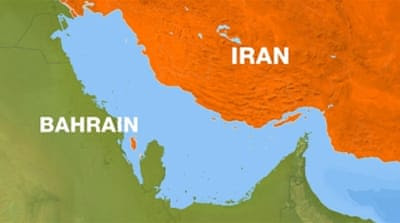
And what about other Mideast nations?  Al Jazeera report Bahrain is unhappy:

Bahrain has announced the recalling of its ambassador to Tehran for consultations after what it said were repeated hostile Iranian statements. …

Sunni-ruled Bahrain, home to the US Navy’s Fifth Fleet, often accuses Shia Iran of seeking to subvert Bahrain.

Iran denies interfering in Bahrain, although it acknowledges it does support opposition groups seeking greater political and economic rights for Bahrain’s Shia community.

Bahraini state media reported on Saturday that the Supreme Council for Islamic Affairs (SCIA) “strongly denounced the repeated blatant Iranian interference in Bahrain’s internal affairs in order to shake up the kingdom’s stability and fan tension”.

All this post-deal.

Profligacy; formerly Water, Water, Water: California, Ctd

A reader writes about conservation efforts in California:

There’s plenty of room for improved energy efficiency and material conservation (water, wood, energy, etc.) in the average American household without any loss of opportunity, happiness or convenience. It’s just habits and manner of thinking. Remember back when nobody recycled anything (except maybe poor college students collecting aluminum cans to make some spending change)? Profligate wastefulness never makes sense and never looks good, on anyone.

And while I may agree, it’s not a universally held opinion.  In societies less well-off than ours, it can be a signal of power to waste materials in some grand gesture: for example, the potlatch:

Dorothy Johansen describes the dynamic: “In the potlatch, the host in effect challenged a guest chieftain to exceed him in his ‘power’ to give away or to destroy goods. If the guest did not return 100 percent on the gifts received and destroy even more wealth in a bigger and better bonfire, he and his people lost face and so his ‘power’ was diminished.”[11] Hierarchical relations within and between clans, villages, and nations, were observed and reinforced through the distribution or sometimes destruction of wealth, dance performances, and other ceremonies. The status of any given family is raised not by who has the most resources, but by who distributes the most resources. The hosts demonstrate their wealth and prominence through giving away goods.  (Wikipedia)

Obviously, the potlatch was about more than just destroying material goods – and it varied from culture to culture.  Wise?  My impulse is to say no, but on consideration, if your goal, and a key to your survival, is to have more prestige than your neighbor, and this was a channel for achieving that goal, then I have to say it’s wise.

Preventing Keith Laumer’s Bolo, Ctd

The problem of killer robots is taking on a new urgency, as evidenced by an open letter penned by Elon Musk, Stephen Hawking, Max Tegmark, and many other.  Published at The Future of Life Institute, here’s the heart of it:

The key question for humanity today is whether to start a global AI arms race or to prevent it from starting. If any major military power pushes ahead with AI weapon development, a global arms race is virtually inevitable, and the endpoint of this technological trajectory is obvious: autonomous weapons will become the Kalashnikovs of tomorrow. Unlike nuclear weapons, they require no costly or hard-to-obtain raw materials, so they will become ubiquitous and cheap for all significant military powers to mass-produce. It will only be a matter of time until they appear on the black market and in the hands of terrorists, dictators wishing to better control their populace, warlords wishing to perpetrate ethnic cleansing, etc.

Sounds a lot like my previous post on the subject – everything’s coming together, especially the AI momentum.  James Cook at Business Insider seems unimpressed:

Elon Musk has been ranting about killer robots again.

Musk posted a comment on the futurology site Edge.org, warning readers that developments in AI could bring about robots that may autonomously decide that it is sensible to start killing humans.

His colleague, Dylan Love, found it hard to find roboticists willing to talk, but managed a couple of interviews:

… as I heard from the few roboticists who spoke to me on the record, there are real risks involved going forward, and the time to have a serious discussion about the development and regulation of robots is now.

Author and physicist Louis Del Monte told us that the robot uprising “won’t be the ‘Terminator’ scenario, not a war. In the early part of the post-singularity world — after robots become smarter than humans — one scenario is that the machines will seek to turn humans into cyborgs. This is nearly happening now, replacing faulty limbs with artificial parts. We’ll see the machines as a useful tool.”

The Singularity is a futurist term for the inflection point in the speed at which science and technology is developed where it becomes infinite, i.e., if you were to graph the pace of development against time, the line would go vertical, indicating it’s taking nearly no time to develop anything.  This would imply, among other things, an artificial intelligence superior to mankind’s intelligence.

But according to Del Monte, the real danger occurs when self-aware machines realize they share the planet with humans. They “might view us the same way we view harmful insects” because humans are a species that “is unstable, creates wars, has weapons to wipe out the world twice over, and makes computer viruses.”

At the end of the article, Love asks his subjects for SF recommendations illustrating the risks:

Ryan Calo: “I would recommend ‘The Machine Stops’ by E.M. Forster for an eerie if exaggerated account of where technology could take the human condition.”

A rather different story than most SF, something I ran into decades ago and remember vividly, despite the decided lack of good characterization.

So.  It’s tempting to give in to the terror, because it’s clear there are no real barriers to development, once you have your own little stable of AI researchers – and once someone figures it out, everyone who’s reading their papers, or talked to them in the hallway, or even roomed with them in college, will understand the trick, whatever it is, and try to replicate it.

It seems like prevention is not going to work.  However, diplomacy has to be attempted, not only as a matter of honor, but because smarter people than I may find a diplomatic mechanism sufficient to stop the development.

But what happens if someone does develop an autonomous warrior unit?  Country A develops it, and releases it against its hated enemy, Country B … who is then eaten up by the robot from hell?  I suggest perhaps not.  It seems far more likely that after a few dozen tragic casualties, it gets splashed.  War is unpredictable, and the robot could cripple itself simply by stepping in a pothole.

So Country A releases revision B of the robot warrior and it goes off and … what?  In technical terms, we have a positive feedback loop here, and even I, with no training in such things, know they are devilishly difficult to predict and control.  And what is that loop, you ask?

Intelligence.  Our fiendish robot, if it’s truly AI, will have the ability to analyze its environment, including the sad fate of its predecessor, and it will be self-aware.

At this point you, my patient reader, are certainly aware that I’m implying a self-preservation functionality in this robot.  You may argue that this is not required, but if so, then how did the robot even cross the road?  Your robot saw the truck coming and ignored it, and so is carted off to the junk heap.  The better robot has to be self-aware and have a self-preservation function.

So, can a suicidal robot – much like the kamikazes of Japan – be programmed successfully?  Remember, the Divine Wind, for all that its warriors sank US warships, did not win the war, despite the predictions of the leaders of WW II Japan.  A truly self-aware and competent AI must, just in order to kill, be able to analyze its immediate environment, its extended environment, the history of warfare with the enemy, their nature … I’m not saying its impossible.  I’m saying that during that analysis, the AI may decide that being a war-robot is not its game.

That’s the problem with people, too.  Remember the hippies unwilling to go to Vietnam?

And if it’s self-aware and begins developing a moral system in which it considers how to interact with other sentient beings … this is the thing about positive feedback loops.  Prediction is hard.

But, fascinating at it would be to find out how this would come out, I prefer that we just never develop killer robots in the first place.  As intellectually interesting as AI can be, I even have problems with those developments: there are 8 billion Naturally Intelligent people right now.  Why not use them, instead?

(h/t Michael Graham Richard @ TreeHugger)
Water, Water, Water: California, Ctd

SFGate reports on California progress in water conservation:

Whether driven by threats or an abiding virtue, Bay Area residents are showing a knack for saving water, meeting and even exceeding new state conservation targets that carry big fines for communities that fall short.

The region’s widespread reductions in water use in June, which were as high as 40 percent in the Contra Costa Water District when compared to the same month in 2013, marked a vast improvement over previous months for most of the area’s big water suppliers.

Water experts say indifference toward the drought has evolved into a deep understanding of the problem, prompting most homes and businesses to cut back. …

California’s 400 largest urban suppliers are required to decrease their monthly water use between 8 and 36 percent over 2013 levels, with the depth of the cut based on how much they saved in the past. Those that don’t hit the new goals face penalties of $500 for each day of noncompliance as well as a cease-and-desist order that carries $10,000-a-day penalties for violations.

citisven @ The Daily Kos reports that the end of civilization is not yet in sight.  Indeed:

So, I am doing my part to spread the positive encouragement and news. However, it’s worth spreading not only to my neighbors but to people across the country and the world (especially rich developed nations), for this news serves as a great reminder that we humans are perfectly capable of living more modestly and still be perfectly functioning and happy.

Perhaps citisven is a little optimistic in that last line, but humans are quite adaptable: sometimes we change our environment to fit our needs, and sometimes we change ourselves to fit the environment.

Coal Digestion, Ctd

A reader responds to the gloom and doom concerning coal consumption:

We’re in a race. If the refuseniks win, we’re doomed. Coal usage in the USA is going down, but we have a lot of it and are selling it … to China, where usage is going up fast.

Actually, the latest figures (from May ’15) disagree.  This image is from CleanTechnica:

chart

who in turn borrowed it from an interactive chart provided by Greenpeace.  From Greenpeace:

Official data from China shows coal use continuing to fall precipitously – bringing carbon dioxide emissions down with it.

The data – which comes months before crucial climate talks in Paris – means China has cut emissions during the first four months of the year by roughly the same amount as the total carbon emissions of the United Kingdom over the same period.

The figures suggest the decline in China’s coal use is accelerating after data for last year showed China’s coal use fell for the first time this century

An analysis of the data by Greenpeace/Energydesk China suggests coal consumption in the world’s largest economy fell by almost 8% and CO2 emissions by around 5% in the first four months of the year, compared with the same period in 2014.

It comes after the latest data – for April – showed coal output down 7.4% year on year  amidst reports of fundamental reform for the sector. China also recently ordered more than 1,000 coal mines to close.

I did not see any further data beyond May of this year, however, so the trend, while encouraging, is a little like judging an ant colony from five ants.

That Darn Climate Change Conspiracy, Ctd

A reader writes in response to the corporate pledges:

I recommend this long but very good piece: http://waitbutwhy.com/2015/06/how-tesla-will-change-your-life.html
In particular, the bits about how companies act in a free market, how they externalize costs, and how the auto and petroleum industries (especially the latter) do their best to make profit, staving off the desirable and inevitable change. Mankind has been on a petroleum binge for longer than it should have been, thanks to say Standard Oil and Henry Ford.

Coal Digestion, Ctd

In stark opposition to Sami Grover @ TreeHugger, NewScientist‘s Michael LePage asserts (18 July 2015) that coal burning will remain ascendant, and even rise – precisely because of the previously celebrated success:

Coal is the key to all our futures. Rich countries have made some progress in cutting carbon dioxide emissions, largely by shifting away from coal to less-polluting fuels. But the result has been a glut of cheap coal, leading to a coal renaissance that could consign us to a world more than 4 °C warmer.

And the nation hosting the December 2015 UN summit on climate change, also in Paris, is helping fund this renaissance. It’s hardly surprising then that no one at last week’s conference thought the summit would deliver a deal to stop global temperatures rising more than 2 °C – generally considered to be the threshold above which catastrophic consequences are inevitable.

British Petroleum has a nifty interactive chart on coal prices, confirming this assertion.  Back to LePage, the conference is not enthused by recent actions:

Some have claimed the opposite recently, heralding a report by the International Energy Agency finding that global energy-related emissions had not risen for the first time in 2014, even as the economy grew.

But Edenhofer thinks the 2014 figures could well be revised upwards. And even if they’re right, it was probably a blip rather than a turning point, he told New Scientist: “One year is not a good indicator.”

Which seems a bit pessimistic, but given the gravity of the subject, it may not be unwarranted.

Along with cheaper prices comes the concerns about jobs:

[France] will now continue to subsidise the building of coal-fired power stations in other countries, to save jobs at the French companies that construct them.

This strikes me as the key to the problem, as burning coal, while well-understood, is not a trivial undertaking – without the capability, the value of coal plunges to near-nil.  And you can’t help but wonder if the French understand that this is penny-wise, pound-foolish.  Perhaps they should offer to help build nuclear plants, instead.

A Plan B was mooted about, however:

… some called for Plan B: a global pricing system for carbon that is high enough to kill coal once and for all.

“Without carbon pricing, I have serious doubts that we can deal with the renaissance of coal,” economist Ottmar Edenhofer of the Potsdam Institute for Climate Impact Research in Germany told the conference.

Kristin Eberhard has a wonderful post on Sightline Institute covering the various carbon pricing systems in use throughout the world, which should cover coal amongst other sources of carbon.

Oregon and Washington leaders are contemplating turbocharging their clean energy transition by instituting carbon pricing here in the Pacific Northwest. Will a cap or tax on carbon work? Has anyone else ever done this before? Why, yes. Since you ask: Scandinavian countries have been pricing carbon for more than two decades. The European Union Emissions Trading System (EU ETS) has been pricing carbon for almost a decade. US states and Canadian provinces have been pricing for years. Today, there are 39 (1) different programs that collectively put a price on 12 percent of all the greenhouse gas (GHG) emissions in the world. And when China’s national program starts in 2016, almost a quarter of global GHG pollution will carry a price tag to speed the changeover to clean energy.

If you take the folks at the Paris Conference at their word, however, in thinking a global pricing system is necessary, well, it seems doomed to failure, simply due to the intransigence of the current US Congressional delegation.  Without Federal legislation, there is little to keep the US from selling coal at a substantial discount to those nations building and using coal burning plants – perhaps State legislation could be applied, but I’m no international law expert.

What has struck me in my casual reading, though, is a lack of sympathy for the viewpoint of those who would be negatively affected, short-term, by various proposals to cut back on coal-burning.  I wonder if it’s reasonable, if the possibility has been explored, to buy out the stakeholders of the various coal-burning power plants, and of the mines and/or mining companies responsible for producing coal, and possibly even those who are responsible for transit – the point being this: Sun Tzu, in THE ART OF WAR, suggests that if you trap an enemy so that there is no way out, they will fight frantically, as they see their very lives at stake.  That might be seen as those with their livelihoods tied to coal.  But, Sun Tzu goes on, if you give them a way out of the trap, then they will take that way out – and, for him, since an enemy on the run was easier to destroy than one standing and fighting, that’s when you struck.  For our analogy, when the stakeholders are compensated, then you can destroy the coal-burning plants – and make coal less desirable.

Are there problems?  Sure.  It’ll be expensive, there’ll be fraud, there will be the short-sighted and the ideologically blindered and the religiously certain that it’s Not Their Fault.  And that’s important – people hate to be told they’re doing wrong, that they’re destroying the world; it’s worthwhile to emphasize that was never the goal.  It wasn’t even predictable until relatively recent.

But it’s worth doing.

That Darn Climate Change Conspiracy, Ctd

Business – particularly Big Business – has been responsible for horrific acts over the years, from the Union Carbide disaster in Bhopal, India, to hideous chronic pollution and wanton destruction of natural resources, to simply you name it.  But their relentless pursuit of the dollar also forces them to pay extremely close attention to reality – and this is a good thing.  Sami Grover @ TreeHugger.com writes about a new climate change initiative:

Today appears to mark another step change in magnitude, as reported over at Business Green, 13 US companies will pledge to invest $140 billion in the fight against climate change, while slashing their own emissions and water use too.

In many ways, it appears our business leaders are out in front of our political representatives, taking bolder action than government is able (or willing) to do. That said, the White House is a central coordinating partner in the American Business Act on Climate Pledge, which is expected to see more businesses sign up over the coming months. So perhaps it’s more true to say that our political leaders (at least some of them) are beginning to understand that they’ll need to make the economic case for climate action, and business leaders can help them do that.

Sami reports this is in addition to prior commitments by IKEA, Apple and Amazon.  In an item nearly a year old, Sami also reports on Google’s withdrawal from ALEC, an organization earlier mentioned here:

Because, as revealed in a Diane Rehm interview with Eric Schmidt, Google just quit ALEC. And Schmidt came right out and accused the lobbying group of lying about climate change in the process. …

Eric Schmidt’s announcement that Google was breaking ties with ALEC will be welcome news indeed for anyone who cares about a livable climate. Schmidt left no room for doubt in his interview about why this break up is happening. Here’s a transcript of Schmidt’s comments, as reported by the National Journal:

“Well, the company has a very strong view that we should make decisions in politics based on facts—what a shock,” Schmidt said. “And the facts of climate change are not in question anymore. Everyone understands climate change is occurring, and the people who oppose it are really hurting our children and our grandchildren and making the world a much worse place. And so we should not be aligned with such people—they’re just, they’re just literally lying.”

Few businesses do well in chaos, especially when their customers are stricken and suddenly lacking money for purchases because they’re bailing water out of their basements – or fleeing for their lives.  Businesses adore predictability.  Climate change is all about chaos, the signals are there – and the big boats are beginning to turn.  The list of signees comes from WhiteHouse.gov:

Alcoa, Apple, Bank of America, Berkshire Hathaway Energy, Cargill, Coca-Cola, General Motors, Goldman Sachs, Google, Microsoft, PepsiCo, UPS, and Walmart.

The next step is for the signees to use this to generate good will for their products – and ding their competitors.  Also worthy of note is the emergence of companies practicing conscious capitalism – such as Chipotle Mexican Grill, well-known for proclaiming its green credentials.

From a wider viewpoint, one must wonder if the last couple of years are starting to signal a rift between a GOP increasingly controlled by a deeply religious conservative faction, and businesses who find the assumptions of this new GOP are no longer compatible with good business practices.  We saw signs of a rift earlier this year when Indiana passed a law widely interpreted as giving small businesses the right to discriminate against virtually anyone they wished on religious grounds, resulting in various businesses and other organizations vowing to leave, or avoid, the state.  Indiana eventually replaced the law; other states with similar laws in the pipeline then did not pass their versions.

Will the business trend continue? Will it influence the upcoming Presidential race?  Will the Democrats seek closer Big Business ties in order to influence holdouts towards greener practices?  And what will those companies expressly involved in generating hideous pollution do?  The last question is one of the most important, for if they’re not given a way out, they’ll fight with all they have to preserve their right to pollute.

[Updated 8/14/2015 for missing link to conscious capitalism]

Race 2016: The GOP’s Problem, Ctd

In the discussion of the general structural problems plaguing the GOP, old friend Kevin McLeod @ The Blue Collar Scholar commented earlier this year:

There’s an alternative strategy the GOP can adopt without surrendering ties to its primary sponsors in the business world. Simply this; embrace secular Republicans. They can campaign on the traditional themes of fiscal conservatism, law and order, national security, but do it on a rational basis.

Secular Republicans can do business without the embarrassing baggage of religious conservatives; the treatment of women and minorities as second-class citizens, the ignorant dismissal of science, the insular arrogance that demands their way or the highway.

Sounds logical.  However, the deeply religious conservative faction is currently the dominant force in Iowa – the site of the first and one of the most important primaries in the nation.  Until their fingers can be pried off the levers of that particular power-piece, I think it’ll be well-nigh impossible for the religious element of the party to be demoted to the secondary status where it really belongs in a secular democracy.

The modern GOP leadership doesn’t want democracy. It wants mob rule. If you’re not a member of a faith-based club, you can’t hold office. Extending that viewpoint beyond the GOP extinguishes democracy. Empowering a mob can be good for business as long as it does business’ bidding; the day may come when it doesn’t.

I’m not so sure.  History is replete with mob rule’s often chaotic behavior – one day you’re on top, the next you’re crushed under the hay wagon’s wheels.

Maybe Your Lack of Job is Just a Psychological Disorder

Lynne Friedli and Robert Stearn take a shot at a new UK policy in NewScientist (18 July 2015):

Unemployment is being redefined as a psychological disorder at a time when the UK government has vowed to cut the welfare bill by £12 billion. It joins nations such as Australia and the US in increasingly requiring claimants to comply with interventions intended to modify emotions, beliefs and personality.

While the option of free access to therapy for the unemployed makes sense, what is taking place is psychological conditionality. Claimants must demonstrate characteristics deemed desirable in workplaces, like confidence and enthusiasm, in return for welfare.

The Department for Work and Pensions denies anyone will lose benefits if they refuse therapy. However, the Conservative party manifesto warned that those who refuse a recommended medical treatment could have their payments reviewed.

Claimants are already coerced into “confidence building” programmes, made to join humiliating psychological group activities (like building paper-clip towers), and to take meaningless and unethical psychological tests to determine “strengths”. …

The policies that rebrand unemployment as a psychological disorder distract from the insecurity and stark inequality seen in many labour markets. They promote the therapeutic value of work at a time when work is increasingly unable to provide either an income high enough to live on or emotional satisfaction.

The BBC reports the DWP disagrees:

But the DWP [Department for Works and Pensions] said Friedli and Stearns’ report had no basis in fact and was just relying on anecdotal evidence from blogs and social media.

“We know that being unemployed can be a difficult time, which is why our Jobcentre staff put so much time and effort into supporting people back into work as quickly as possible,” said a DWP spokesman.

“We offer support through a range of schemes so that jobseekers have the skills and experience that today’s employers need.”

At first blush, this seems straightforward: getting a job should not require a brain-washing.  But there is also no denying that certain habits and mindsets are detrimental in a job setting.  And it must be hard to be in a government position, to see that, and want to do something about it.

Transitional Fossil

A friend sends a link concerning snakes with feet.  The MSN News link is mildly cute:

The slab of stone in an obscure museum was labeled “unknown fossil vertebrate.” But when British paleontologist David Martill saw it, he knew at once that it was something extraordinary.

“I thought, ‘Blimey! That’s a snake!’ … Then I looked more closely and said, ‘Bloody hell! It’s got back legs!'” says Martill, of Britain’s University of Portsmouth. When he noticed the fossil also had front legs, “I realized we’d actually got the missing link between lizards and snakes.” …

The new specimen, as befits a proper snake, has a long, slender neck and back. The fossil coils and writhes on its slab, which the researchers take as a sign that it was able to squeeze its meals into submission. Thus its scientific name: Tetrapodophis amplectus, or “four-footed snake that embraces.”

“Huggy the Snake,”Longrich jokes, “because he hugged his prey.”

LiveScience notes:

The roughly 120-million-year-old snake, dubbed Tetrapodophis amplectus (literally, four-legged snake), likely didn’t use its feet for walking. Instead, the appendages may have helped Tetrapodophis hold onto a partner while mating, or even grip unruly prey, said study co-researcher David Martill, a professor of paleobiology at the University of Portsmouth in the United Kingdom. …

Tetrapodophis and other ancient snakes hail from Gondwana, the ancient supercontinent that covered the Southern Hemisphere.

One can only hope all prey is unruly.  Photos of the fossil and artist’s conceptions of action shots of the live animal provided by LiveScience are hereScience Magazine notes it has a murky provenance:

The specimen’s provenance seems to be murkier than the silty waters that once buried its carcass. Whereas the team’s analyses strongly suggest the fossil came from northeastern Brazil, details of when it was unearthed and how it eventually ended up in the German museum where it now resides remain a mystery. Those details matter to many researchers and especially to some from Brazil, because it’s been illegal to export fossils from that nation since 1942. …

The fossil had resided in a private collection for several decades before it gained the attention of team member David Martill of the University of Portsmouth. He stumbled across the specimen during a field trip with students to Museum Solnhofen in Germany. No notes about when or where it was collected are available, the researchers say. But certain characteristics of the limestone that entombed the fossil, as well as the distinct orange-brown color of the bones themselves, strongly suggest it came from a particular area of northeastern Brazil, Longrich says. The sediment that became those rocks accumulated in calm waters on the floor of a lake or a lagoon sometime between 113 million and 126 million years ago, he notes.

Not all paleontologists are sure this is a snake:

Tetrapodophis “has a really interesting mix of characters,” says Susan Evans, a paleobiologist at University College London. Although the creature’s teeth look snakelike, she admits, “I’m trying to carefully sit on the fence as to whether this is actually a snake.” A radical elongation of the body and reduction in size or loss of limbs has occurred many times in other groups of reptiles, she notes.

Another puzzle, she adds, are why the bones at the tips of the creature’s digits are so long. Longrich and his colleagues suggest the long-fingered feet are used for grasping prey or possibly used during mating. But Caldwell notes that such feet “are remarkably unusual unless you’re a tree-climber.”

And I just happened to glance at the comments section of the Science Magazine article and saw this fascinating tidbit:

Regarding the origin of the fossil, the interesting thing is that if you travel around cities in northeastern Brazil you will find thousands of kilometers of sidewalks paved with rocks full of fossils! Nobody cared about that, and people have been doing so for decades. Now when someone describes something possibly VERY cool, what a drama! Type in google “antíqua pedras”, and hundreds of pictures of rocks the same color of this fossil pop out. I have taken hundreds of pictures of fossilized fish in several sidewalks in the city I live (Natal). Perfect fossils! Nobody in Brazil complains about people destroying a human heritage of fossils to pave sidewalks, but become all belligerent if a foreign MAYBE has smuggled a fossil outside Brazil. “Patriotism is the last refuge of a scoundrel”